
The Best Temperature, UV Light, and Humidity for Windshield Repair
When most people think about windshield repair, they picture a technician filling a rock chip with resin and shining a UV light on it. The truth is, there is much more to it.
SAN DIEGO WINDSHIELD REPAIRWINDSHIELD REPAIR CRITICAL EDUCATIONPITSTOP AUTOGLASS WINDSHIELD REPAIR SCIENCE BLOG
Gillian R. - Pitstop Autoglass - San Diego
3/15/20265 min read
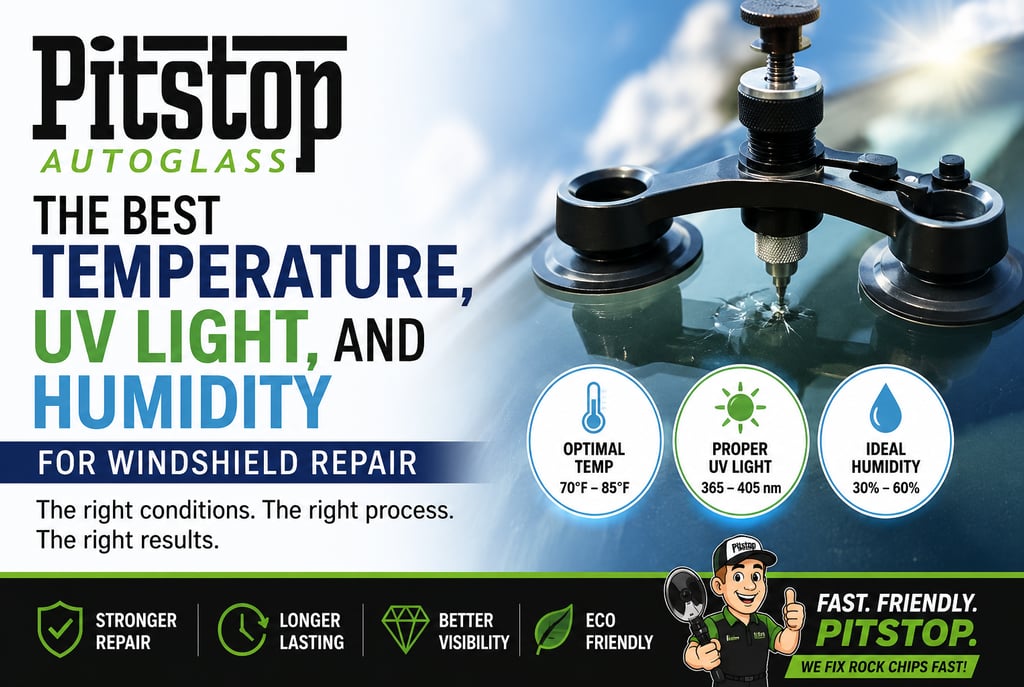
When most people think about windshield repair, they picture a technician filling a rock chip with resin and shining a UV light on it.
The truth is, there is much more to it.
A successful windshield repair depends on three important factors:
Temperature
UV light
Humidity
At Pitstop Autoglass + Windshield Repair Service Center®, we've been repairing windshields since 1997. Over the years, we've learned that controlling the environment is just as important as using quality repair resin.
* If the weather isn't right, even the best repair can become more difficult. That is why when weather gets extreme, we close up shop until we can ensure the proper repair conditions are met.
If you'd like to learn more about our repair process, visit our Windshield Repair in San Diego page: https://pitstopautoglass.com/windshield-repair-in-san-diego
Why Weather Matters
Modern windshield repair resin is designed to do three things:
Flow deep into the damaged glass.
Push trapped air out of the break.
Harden into a strong, clear repair.
Temperature, moisture, and UV light all affect how well the resin performs.
When conditions are right, the resin flows better, cures faster, and leaves a cleaner-looking repair.
The Best Temperature for Windshield Repair
Ideal Temperature: 70°F to 85°F
** Note: We gauge our operational temperatures from the AccuWeather RealFeel® metrics.
This is the temperature range where most professional repair resins perform their best.
When the glass is between 70°F and 85°F, the resin:
Flows easily
Fills small cracks more completely
Removes trapped air faster
Cures at a predictable rate
Produces the best cosmetic results
This is one reason we perform all repairs at our controlled shop in Carmel Mountain Ranch instead of offering mobile repairs.
A controlled work area allows us to produce more consistent results.
Learn more about our shop and directions here:
https://pitstopautoglass.com/contact
Cold Weather Makes Resin Thick
Cold weather changes the way resin behaves.
Think about pouring honey.
Warm honey pours quickly.
Cold honey barely moves.
Windshield repair resin acts the same way.
When temperatures drop below 60°F, the resin becomes thicker. Thick resin moves through the damage more slowly.
This can lead to:
Longer repair times
More trapped air
Poor resin penetration
Less cosmetic improvement
Below 40°F, many resin manufacturers recommend warming the windshield before beginning the repair.
The important thing isn't just the outside temperature.
It's the temperature of the glass.
Glass Temperature Is More Important Than Air Temperature
Many people check the weather app before scheduling a repair.
Professionals check the windshield.
For example:
The air may be 75°F, but a windshield sitting in direct sunlight can reach 120°F or more.
On a winter morning, the air might be 50°F, while the windshield is only 38°F.
Since the repair happens inside the glass, glass temperature is what really matters.
Hot Weather Can Also Cause Problems
Very hot glass creates a different challenge.
When the windshield becomes too hot, the resin gets much thinner.
Thin resin flows quickly, but it can also:
Leak from the injector
Cure too soon
Shrink more during curing
Become harder to control
If a vehicle has been sitting in the San Diego sun, we often allow the windshield to cool before beginning the repair.
That extra step helps produce a cleaner repair.
UV Light Cures the Resin
Windshield repair resin hardens when it is exposed to ultraviolet light.
Without enough UV light, the repair may not cure completely.
A fully cured repair is stronger and lasts longer.
Is Sunlight Enough?
Usually, yes.
Bright sunlight provides plenty of UV energy for windshield repair.
However, professional repair shops often use calibrated UV curing lamps.
These lamps provide consistent curing every time, no matter the weather.
That means the repair is not affected by:
Clouds
Shade
Time of day
Season
Consistency is one reason professional repairs often outperform DIY kits.
If you're wondering whether a repair is worth it, read our guide:
How Much Does Windshield Repair Cost in San Diego?
https://pitstopautoglass.com/windshield-repair-cost-in-san-diego
Can Windshield Repair Be Done on a Cloudy Day?
Yes.
Clouds reduce UV light, but they do not block it completely.
The repair simply takes longer to cure.
Professional UV lamps remove that guesswork by delivering the same curing power every time.
Can Windshield Repair Be Done at Night?
Absolutely.
Professional UV curing lamps make nighttime repairs possible.
In fact, many technicians prefer using a UV lamp because it delivers consistent results regardless of outdoor conditions.
The Right UV Wavelength
Most professional windshield repair resins cure best with UV light around 365 nanometers (nm).
Professional curing lamps are designed to produce light in this range.
Not every UV flashlight can do that.
Using the wrong light may leave the resin only partially cured.
Humidity Also Matters
Moisture is one of the biggest enemies of windshield repair.
Water trapped inside a rock chip keeps the resin from bonding properly.
That can leave the repair looking cloudy or white.
Best Humidity Range
The ideal humidity is about 30% to 60% relative humidity.
In this range:
Moisture stays low.
Resin bonds well.
Cosmetic results improve.
High Humidity Creates Challenges
When humidity rises above 70%, moisture becomes harder to remove from the damaged glass.
Problems can include:
Water trapped inside the break
Cloudy repairs
Poor bonding
White spots inside the repair
This is another reason we inspect every windshield before beginning the repair.
If moisture is present, we remove it before injecting resin.
Wind Can Affect Repairs
Wind might not seem important, but it can cause problems.
Strong wind can:
Blow dust into the damage
Cool the windshield unevenly
Contaminate the resin
Make repairs harder to control
Performing repairs inside a clean shop helps eliminate these issues.
Avoid Sudden Temperature Changes
Fresh windshield damage is already under stress.
Rapid heating or cooling can cause the crack to spread.
Avoid:
Pouring hot water on icy glass
Washing a hot windshield with cold water
Running the defroster on full heat immediately
Blasting cold air onto hot glass
Instead, allow the windshield to reach a normal temperature before repairing it.
Why We Perform Repairs at Our Shop
At Pitstop Autoglass + Windshield Repair Service Center®, we designed our repair process around consistency.
Our facility lets us control many of the factors that affect repair quality, including:
Glass temperature
UV curing
Dust
Wind
Moisture
Those small details often make the difference between an average repair and an excellent one.
If you haven't visited us before, we're conveniently located in Carmel Mountain Ranch, just minutes from Rancho Bernardo, Poway, Rancho Peñasquitos, Mira Mesa, and Scripps Ranch.
Get directions here:
https://pitstopautoglass.com/contact
Learn More About Windshield Repair
If you enjoy learning how windshield repair works, check out these helpful articles from the Pitstop Learning Center:
How Much Does Windshield Repair Cost in San Diego?
https://pitstopautoglass.com/windshield-repair-cost-in-san-diegoWindshield Repair in San Diego
https://pitstopautoglass.com/windshield-repair-in-san-diegoWindshield Repair vs. Replacement: Which Is Better?
https://pitstopautoglass.com/blog/Windshield Rock Chip Prevention Tips
https://pitstopautoglass.com/blog/How Long Can You Drive With a Cracked Windshield?
https://pitstopautoglass.com/blog/
Final Thoughts
A quality windshield repair is about more than resin and UV light.
The best repairs happen when the technician controls the environment.
The ideal conditions are:
Glass temperature between 70°F and 85°F
Relative humidity between 30% and 60%
A professional UV curing lamp and strong natural sunlight
A clean, dry work area
At Pitstop Autoglass + Windshield Repair Service Center®, we've focused on these details since 1997. It's one reason drivers across San Diego trust us for fast, professional windshield repair that helps preserve the strength of their original factory windshield.
If you have a rock chip or crack, don't wait for it to spread.
Schedule your repair today at:
© 1997-2026. All rights reserved. Pitstop Autoglass + Windshield Repair Service Center® - 11905 Carmel Mountain Road, San Diego, CA 92128 | Info line: 858-675-4527 | Auto Windshield Repair San Diego, Auto Glass Repair, Best Prices, Great Service, Fast 15 Minute Windshield Repair Starting at Only $60, Carmel Mountain Windshield Repair.

Walk-in Hours: Tuesday-Friday 10a-3p, Saturday 10a-2p
Information line: 858-675-4527
NOTE: This is a recorded message line.
Fast, convenient service for Carmel Mountain, Poway, Scripps Ranch, Rancho Penasquitos, 4S Ranch, Escondido, Fairbanks Ranch and Mira Mesa residents.

